

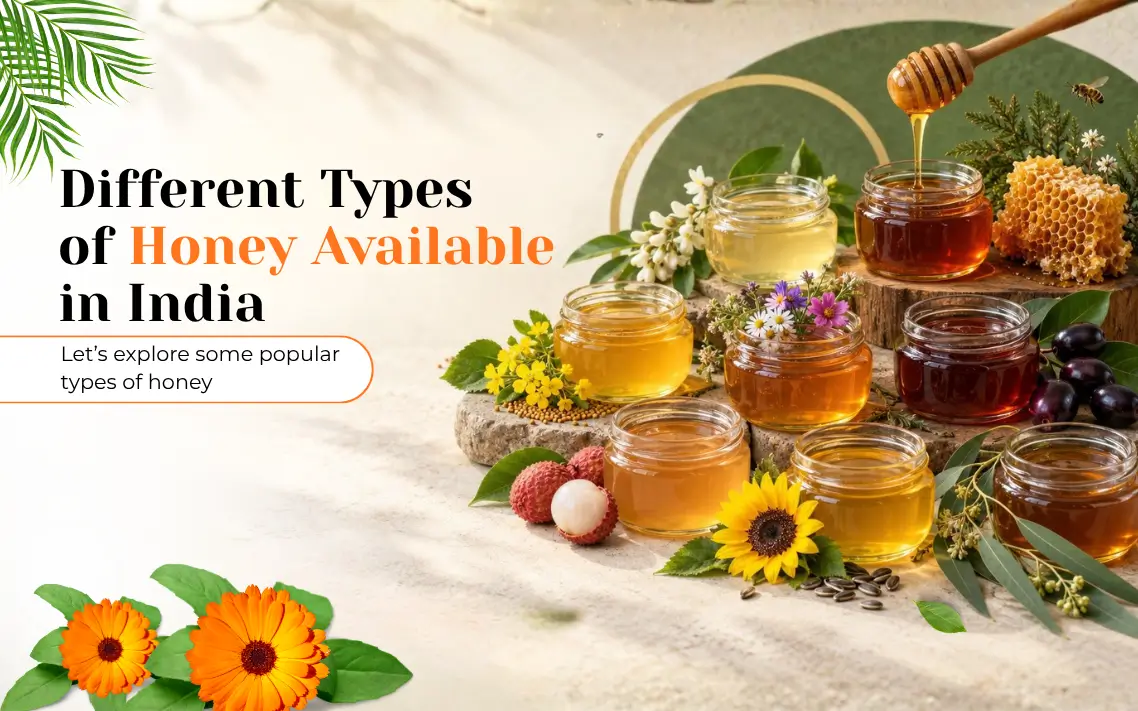
India’s diverse climate, forests and flowering crops produce many unique varieties of natural honey. Each type has its own colour, aroma, flavour and texture, depending on the flowers visited by honeybees.
Let’s explore some popular types of honey available in India and discover what makes each one different.
Its taste, colour and aroma may change slightly with every harvest. It is usually pleasantly sweet and is a versatile option for daily use.
Best for : Warm water, toast, breakfast bowls, desserts and natural sweetening.
2. Mustard Honey : Mustard honey comes mainly from the bright yellow flowers of mustard crops. It commonly has a light colour, mild floral aroma and smooth sweetness.
Mustard honey may crystallize faster than some other varieties. This is a natural characteristic and does not mean that the honey has spoiled.
Best for : Tea, toast, homemade dressings and everyday meals.
3. Ajwain Honey : Ajwain honey is collected when bees forage mainly around ajwain flowers. It has a distinctive aroma and a stronger, slightly herbal flavour compared with regular multiflora honey.
Its unique taste makes it a good choice for people who enjoy aromatic honey varieties.
Best for : Warm drinks, herbal beverages and direct consumption.
4. Litchi Honey : Litchi honey is mainly produced in regions with abundant litchi orchards. It is generally light in colour and has a gentle sweetness with a delicate floral aroma.
Its mild flavour makes it suitable for people who prefer honey that is not too strong.
Best for : Pancakes, yoghurt, smoothies, desserts and fruit bowls.
5. Jamun Honey : Jamun honey is produced from nectar collected around jamun blossoms. It is generally darker than mustard or litchi honey and may have a rich, slightly intense flavour.
Because honey remains a natural source of sugar, it should still be consumed in moderation.
Best for : Warm beverages, traditional recipes and people who prefer stronger flavours.
6. Eucalyptus Honey : Eucalyptus honey is produced when bees collect nectar from eucalyptus flowers. It usually has a bold aroma, medium-to-dark colour and distinctive woody or herbal notes.
Its strong character makes it quite different from lighter floral honey varieties.
Best for : Herbal drinks, marinades and recipes requiring a deeper honey flavour.
7. Acacia Honey : Acacia honey is valued for its light colour, gentle aroma and mild sweetness. It often remains liquid for longer than honey varieties with higher natural glucose content.
Its subtle taste does not easily overpower other ingredients.
Best for : Green tea, breakfast cereals, salads and light desserts.
8. Himalayan Forest Honey : Himalayan forest honey is collected from the diverse flowers, herbs and trees found in Himalayan and sub-Himalayan regions.
Its colour and flavour vary depending on the location and season. It often has a rich aroma and layered taste reflecting its mixed forest sources.
Best for : Direct consumption, warm drinks and traditional recipes.
9. Tulsi Honey : Tulsi honey is produced when beehives are placed near areas where tulsi flowers are abundantly available. It can have a pleasant herbal aroma and a distinct floral sweetness.
It should not be confused with ordinary honey mixed with tulsi flavour or extract. Always read the product label carefully.
Best for : Herbal tea, warm water and everyday sweetening.
10. White Honey : White honey gets its name from its naturally pale colour and creamy appearance. It is not completely white but can range from light ivory to pale golden.
Depending on its floral source and natural sugar composition, it may develop a smooth, crystallized texture.
Best for : Toast, waffles, spreads and breakfast recipes.
Why Does Every Honey Variety Taste Different?
The characteristics of honey are primarily influenced by its floral and geographical origins. Other factors include:
- Harvesting season
- Weather conditions
- Type of vegetation
- Moisture content
- Natural sugar composition
- Storage temperature
For this reason, two batches of natural honey may not always look or taste exactly alike. Such variation is normal in naturally produced food.
Explore Natural Honey with Samanyu Honey
From mild and floral to deep and aromatic, India offers honey for almost every taste.
At Samanyu Honey, we celebrate the natural diversity of honey and the hardworking bees behind every jar. Explore our honey collection and find the flavour that suits your everyday routine.
Discover Samanyu Honey today and enjoy nature’s sweetness in every spoonful.
Frequently Asked Questions
Q. How many types of honey are available in India?
Ans. India has numerous honey varieties because of its diverse crops, forests, climates and flowering seasons.
Q. Why does some honey crystallize quickly?
Ans. Crystallization depends on the honey’s natural sugar composition and storage temperature. It does not automatically indicate poor quality.
Q. Which honey has a mild flavour?
Ans. Litchi and acacia honey are generally known for their light colour and delicate flavour.
Q. Which honey has a stronger taste?
Ans. Ajwain, eucalyptus, jamun and some forest honey varieties may have stronger or more distinctive flavours.
Q. Can infants consume honey?
Ans. Honey should not be given to children under 12 months of age.